Every now and then in Scripture, we stumble across a story that stops us in our tracks—not because it’s hard to understand, but because it’s so unexpected. A story that pulls us in like a scene from a movie. You’re reading along, and suddenly there’s a funeral procession, a band of raiders, a rushed burial, and a dead man being thrown into a prophet’s tomb. And then—just when you think the story is over—he stands up on his feet.
It’s shocking. It’s strange. And if we’re honest, it raises more questions than answers. But buried in this wild moment is one of the most hope-filled truths in the Old Testament: God’s power is not limited by the strength of His servants, the length of their life, or the condition of their bones.
In fact, this miracle reveals that:
- God works beyond our lifetime,
- He moves in places we don’t expect,
- And He often brings resurrection in the very places we see nothing but decay.
This story isn’t here to entertain us—it’s here to teach us how God works in the in-between moments of life, in the messy seasons, in our weakness, and long after we’re gone. It shows us that faithfulness outlives the faithful, and that the legacy God builds through you can echo far beyond your lifespan.
So today, we’re going to look at these two verses and discover that your story—your obedience, your surrender, your broken places—can carry resurrection power into someone else’s future.
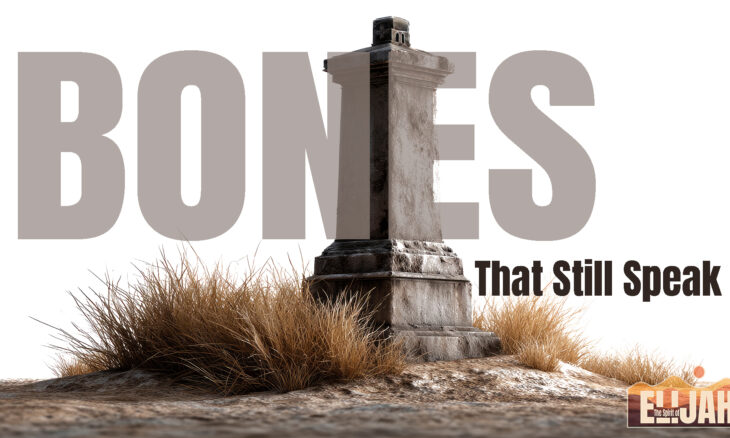
Elisha’s bones still spoke.
And one day, yours will too……..
II Kings 13:20-21
Now Moabite raiders used to enter the country every spring. 21 Once while some Israelites were burying a man, suddenly they saw a band of raiders; so they threw the man’s body into Elisha’s tomb. When the body touched Elisha’s bones, the man came to life and stood up on his feet.
I. A Strange Story With a Strong Message
This is one of the most surprising scenes in the entire Old Testament. It almost reads like something from a movie:
- A funeral procession,
- A sudden ambush,
- A hurried burial,
- And then—out of nowhere—a resurrection triggered by contact with the bones of a long-dead prophet.
It’s strange, but it carries a powerful message about how God works far beyond our expectations.
A. God’s power did not die when Elisha did
- Elisha is gone… but God is not.
- The miracle shows that the power was never in the man—it was always in God.
- Even dry, forgotten bones became a conduit for resurrection.
B. God delights in using unexpected things
- A tomb becomes a testimony.
- Dry bones become instruments of life.
- What seems “over” to us is often the beginning of what God wants to do next.
This is classic God. Throughout Scripture, He takes what looks unusable and breathes life into it:
- A shepherd’s staff parts the Red Sea.
- A slingshot defeats a giant.
- Five loaves and two fish feed thousands.
- A Roman cross becomes the doorway to salvation.
You may feel like your story is too broken, too ordinary, too messed up, or too “over” for God to use. But God specializes in surprising places and surprising people. If He can turn Elisha’s dusty bones into resurrection power, imagine what He can do with a living, breathing person who is willing to be used.
C. The message: God is not limited by death, time, or circumstances
- If He used bones, He can use your story.
- If He worked after Elisha’s lifetime, He can work beyond your lifetime.
- If He resurrected a dead man at a funeral, He can resurrect hope, faith, and purpose in you.
Some of the prayers you pray today will be answered long after you’re gone. Some of the seeds of faith you sow will sprout in the lives of your children, grandchildren, coworkers, or neighbors years later.
Your obedience today is not wasted—it has a ripple effect that outlives you.
II. Faithfulness Outlives the Faithful
A. Elisha’s consistency created a legacy of spiritual power
Elisha didn’t live a flashy life. He wasn’t a social media prophet with a platform. His ministry was marked by simple, steady obedience over the long haul.
He followed Elijah faithfully.
- He didn’t chase greatness—he chased obedience. When Elijah told him to stay behind, Elisha said, “As surely as the Lord lives… I will not leave you” (2 Kings 2:2). That persistence shaped him into a man God could trust.
He served through hostile kings and messy situations.
- Elisha ministered during spiritually dark times—corrupt kings, idolatry, oppression, war. Yet he kept showing up, listening to God, and speaking truth.
His lifelong obedience set the stage for a miracle he wasn’t alive to see.
Don’t underestimate the quiet power of consistency—reading Scripture daily, praying over your kids, showing up at church, serving behind the scenes, loving people faithfully. You may not see the miracle in your lifetime, but God may still use your obedience to spark resurrection in someone else.
B. Your impact is rarely seen immediately
- Seeds you plant today may not sprout until years later.
- Faithfulness in obscurity becomes fruitfulness in God’s timing.
- Legacy is not what you achieve—it’s what you leave behind.
Hebrews 11:4
By faith Abel offered to God a more acceptable sacrifice than Cain, through which he was commended as righteous, God commending him by accepting his gifts. And through his faith, though he died, he still speaks.
C. God uses ordinary obedience to bring life to others
The miracle in Elisha’s tomb teaches us that God doesn’t need dramatic moments or perfect conditions—He needs people who will be faithful with the day-to-day opportunities in front of them.
Here’s how this applies today:
Parents:
- You may feel like your conversations with your kids aren’t getting through… but years from now, something you said, prayed, or lived out may resurrect their faith. Your obedience today is shaping their tomorrow.
Students / Ministers:
- Someone may remember your kindness, integrity, or faith long after they forget your name. God uses your example in ways you’ll never know on this side of eternity.
Church Leaders:
- The prayers you pray now may be answered long after you’re in heaven. The sermons you preach, the people you disciple, the decisions you make—all of these create spiritual momentum that God will use long after your season is over.
“Faithfulness today can bring life long after you’re gone.”
III. God’s Power Works Through Our Weakness and Brokenness
When the miracle happened in Elisha’s tomb, it wasn’t just about legacy—it was a loud declaration that God often does His greatest work through the very things we consider weak, broken, or “done.” God didn’t use Elisha at his strongest… but at his barest. What was left of him—his bones—became the place where resurrection power broke out.
A. Elisha’s bones were a reminder of human frailty
Bones are all that remain after the color, strength, energy, and vitality of life have faded. They represent the limits of humanity:
- Bones = what remains after weakness, sickness, and limitations.
Elisha’s body had long since surrendered to death. His prophetic voice was silent. His ministry was complete.
- God works through our “leftovers.”
God didn’t need Elisha’s voice, hands, or presence—He used what was left behind. The message? When you feel like you’ve run out, God has not.
- His strength is magnified in what looks useless to us.
What Israel saw as a burial site, God saw as a launching point for one more miracle.
B. Your broken places can become resurrection places
The miracle in that tomb wasn’t about Elisha’s strength—it was about God breathing life through brokenness. The same is true for us.
- Your testimony can revive someone who feels spiritually dead.
A story of addiction once broken, a marriage restored, a season of depression endured—these become lifelines for others in the same valley.
- Your wounds can become healing for others.
People are rarely helped by your perfection; they are helped by your scars. The places God has healed you are often where He wants to use you.
- Your failures can become someone else’s freedom.
When you share how God lifted you out of sin, shame, or regret, you offer hope to someone who thinks they’re too far gone.
C. You don’t need to be perfect—God uses what you surrender
- Elisha wasn’t there to direct, manage, or participate.
- God does not demand performance—He asks for faithfulness.
- Even when your story seems over, God can give it resurrection power.
2 Corinthians 12:9
“But he said to me, “My grace is sufficient for you, for my power is made perfect in weakness.” Therefore I will boast all the more gladly of my weaknesses, so that the power of Christ may rest upon me..”
Just like that lifeless man who touched the bones of Elisha, people around you may encounter resurrection power through the places where you once felt empty or weak.
“What feels like the end to you may be the beginning of life for someone else.”
IV. God’s Work in Your Story Can Outlast Your Moment
A. God is writing a generational story through you
- Your private obedience becomes someone else’s public breakthrough.
- Your late-night prayers may resurrect future faith.
- Your perseverance may strengthen someone you have never met.
B. Legacy is built by daily choices
Legacy isn’t accidental. It is built slowly, intentionally, and often without applause.
- Reading Scripture — feeding your soul shapes your future and teaches the next generation what matters.
- Serving faithfully — small acts of service form the backbone of a spiritually healthy community.
- Showing grace — every act of forgiveness builds a pathway for others to experience Christ.
- Staying devoted when it’s hard — endurance becomes an example for those who want to quit.
- Planting seeds instead of seeking applause — God honors quiet faithfulness more than loud performance.
C. When you walk with God, your story becomes bigger than you are
- Moses didn’t see the Promised Land—but his faith pointed the way.
- David didn’t build the temple—but his passion prepared the foundation.
- Elisha didn’t witness the miracle—but he made it possible.
Conclusion:
“What Will Your Bones Say?”
This unusual little story leaves us with a sobering and hope-filled question: What will your bones say when your life is over?
- When the dust settles…
- When the crowds fade…
- When the platform is gone…
- When your voice is no longer heard…
- What will remain?
Elisha didn’t live to see his final miracle. His eyes were closed. His voice was silent. His race was finished. But his faithfulness was still at work. His obedience still had a pulse. His legacy still carried power.
So let me ask you:
- Will your private obedience become someone else’s breakthrough?
- Will your prayers echo into the faith of your children and grandchildren?
- Will your scars bring healing to someone else’s wounds?
- Will your faithfulness today give life long after you’re gone?
Because the truth is this:
God can use the surrendered places of your life—your strengths, your weaknesses, your victories, your failures—to breathe resurrection into someone else’s story.
Your life may feel ordinary.
Your influence may feel small.
Your faith may feel quiet.
But heaven sees it—and God multiplies it.
Invitation
Challenge:
- What will remain when your life speaks through memories?
- Will your decisions create life or death for future generations?
- Will your bones—your habits, choices, sacrifices—still speak of God?
Invitation:
“Lord, use my life today so that long after I am gone, someone else rises because of what You did in me.”