
A few years ago, a championship quarterback was interviewed after winning a major game. Everyone watching saw a man at the top of his career—famous, wealthy, respected. But in the interview he said, “People think success fixes everything. But the truth is, I’ve never felt more anxious or more unsure of myself.”
- On the outside: victory.
- On the inside: a quiet struggle no one could see.
And most of us know people like that.
Some of us are people like that.
Life teaches us that you can hold a trophy and still feel empty. You can climb the ladder and still feel lost. You can be admired publicly and broken privately.
That is exactly where we meet Naaman.
In 2 Kings 5, Naaman is introduced as the kind of man everyone wanted to be—successful, powerful, respected, a national hero. If life were a résumé, his was flawless. But Scripture includes one painful sentence:
“He was a mighty man of valor… but he was a leper.”
Beneath the armor was a sickness he could not hide and could not fix.
That is why Naaman’s story speaks so powerfully today. Because:
- You can be accomplished and still broken.
- You can have status and still need saving.
- You can look whole on the outside and still need God’s healing on the inside.
And God begins Naaman’s journey not with a king, not with a miracle, not with a prophet—but with a servant girl. A child. Someone the world would overlook. Her small, humble voice becomes the doorway to everything God wants to do in Naaman’s life.
This story reminds us that God uses the humble, and He heals the humble. But pride—like Naaman’s—can easily block the blessing. Naaman had to come to a place where he was willing to obey God not on his terms, but God’s terms.
Naaman’s story is our story:
- Greatness that can’t heal us.
- Pride that can blind us.
- A God who invites us into simple, humble obedience that leads to real cleansing.
I. A Successful Man with a Secret Sickness
2 Kings 5:1–15
Naaman, commander of the army of the king of Syria, was a great man with his master and in high favor, because by him the Lord had given victory to Syria. He was a mighty man of valor, but he was a leper.[a] 2 Now the Syrians on one of their raids had carried off a little girl from the land of Israel, and she worked in the service of Naaman’s wife. 3 She said to her mistress, “Would that my lord were with the prophet who is in Samaria! He would cure him of his leprosy.”
Naaman has rank, honor, success—yet beneath the armor lies leprosy.
A. You can be accomplished and still broken
- “great man,” “valiant,” “highly regarded” (v.1), but still deeply needy
- Our world assumes success means wholeness—Scripture disagrees
“For all have sinned and fallen short…” (Rom. 3:23)
B. God often uses humble voices
- A young servant girl speaks hope (v. 2–3)
- God uses unexpected messengers
“God chose the weak things…” (1 Cor. 1:27)
Don’t underestimate the spiritual influence of the overlooked, the young, or the ordinary.
II. Pride Almost Blocks the Blessing
2 Kings 5:4–12
So Naaman went in and told his lord, “Thus and so spoke the girl from the land of Israel.” 5 And the king of Syria said, “Go now, and I will send a letter to the king of Israel.”
So he went, taking with him ten talents of silver, six thousand shekels[b] of gold, and ten changes of clothing. 6 And he brought the letter to the king of Israel, which read, “When this letter reaches you, know that I have sent to you Naaman my servant, that you may cure him of his leprosy.” 7 And when the king of Israel read the letter, he tore his clothes and said, “Am I God, to kill and to make alive, that this man sends word to me to cure a man of his leprosy? Only consider, and see how he is seeking a quarrel with me.”
8 But when Elisha the man of God heard that the king of Israel had torn his clothes, he sent to the king, saying, “Why have you torn your clothes? Let him come now to me, that he may know that there is a prophet in Israel.”9 So Naaman came with his horses and chariots and stood at the door of Elisha’s house. 10 And Elisha sent a messenger to him, saying, “Go and wash in the Jordan seven times, and your flesh shall be restored, and you shall be clean.” 11 But Naaman was angry and went away, saying, “Behold, I thought that he would surely come out to me and stand and call upon the name of the Lord his God, and wave his hand over the place and cure the leper. 12 Are not Abana[c] and Pharpar, the rivers of Damascus, better than all the waters of Israel? Could I not wash in them and be clean?” So he turned and went away in a rage.
A. Naaman tries to buy healing with status and wealth
- Takes a royal letter and huge gifts
- Many try to earn what God gives freely
“By grace you have been saved…” (Eph. 2:8–9)
B. Offended by God’s simple answer
- Expected grand gestures, temple rituals, dramatic power displays
- “Are not Abana and Pharpar better…?” (v. 12)
C. Pride says: “I deserve better; I know better.”
- The gospel offends our pride
- We want to achieve salvation instead of receiving it
Like a stubborn person unwilling to take prescribed antibiotics because they “don’t like pills,” Naaman wants healing on his terms.
III. Humble Obedience Opens the Door to Healing
2 Kings 5:13–14
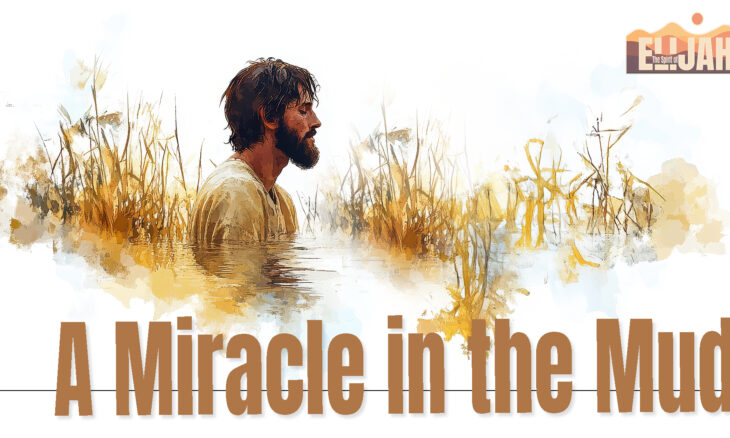
But his servants came near and said to him, “My father, it is a great word the prophet has spoken to you; will you not do it? Has he actually said to you, ‘Wash, and be clean’?” 14 So he went down and dipped himself seven times in the Jordan, according to the word of the man of God, and his flesh was restored like the flesh of a little child, and he was clean.
A. Wise servants speak truth in love
- “If the prophet had told you to do something great…” (v. 13)
- True friends call us back to humility
B. Simple obedience brings supernatural cleansing
- “He went down… and dipped seven times” (v. 14)
- Miracles often flow through simple obedience:
- Noah builds
- Abraham goes
- Disciples cast the net again
- Believer repents & believes (Acts 2:38)
Sometimes the hardest command is the simplest:
- pray
- forgive
- repent
- surrender
- trust God’s Word
Conclusion
2 Kings 5:15
Then he returned to the man of God, he and all his company, and he came and stood before him. And he said, “Behold, I know that there is no God in all the earth but in Israel; so accept now a present from your servant.”
“Go home and tell them how much the Lord has done…” (Mark 5:19)
Where Do You Need to Humble Yourself?
God’s grace meets us not at the height of our strength, but at the place of surrender.
- Where am I wrestling with pride?
- What simple step of obedience am I resisting?
- Who might God be using to speak to me right now that I’ve overlooked?
Jesus is the greater healer who washes us not in the Jordan, but in Baptism with His blood. We come like Naaman—broken, proud, and needing a miracle—and find a new life by his grace.
“Humble yourselves before the Lord, and He will lift you up.” (James 4:10)